Featured

Know Me

HELLO ALL

I am happy you made up to my Blog, I will be Posting contents related to some subjects in Architecture. I love travelling and meeting new people and exploring architecture from round the world. I would also like it if you would get back to me with comments about my content and lets keep it interactive. Have a good day.

Postmodernism: Charles Jencks and Robert Venturi

Postmodernism is an eclectic, colorful style of architecture and decorative art that emerged from the late 1970s and continues in some form today. It emerged as a reaction to modernism and the modern movement, as well as the beliefs associated with it.

Post modernist architecture has bright color, it is playful and it has variety of material and shapes.

Charles Jencks

Charles Jencks

Charles Alexander Jencks was an architectural historian, an American cultural theorist, a landscape designer.

Robert Venturi

Robert Venturi and his wife Denise Scott Brown

Robert Venturi (1925-2018) has been described as one of the most innovative architects in contemporary architecture. It has also been credited with saving modern architecture on its own. He did this by being verbally eloquent with his writings and visually with the appearance of his buildings.

Denise Scott Brown, his wife was equal partner in all his work. There was unsuccessful campaign to share pritzker between his and his wife.

Structuralism

The structuralism came into being as a concept in which social structures and interactions are perceived as fixed and invariant and certainly not changeable.

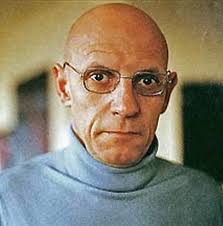
Michel Foucault (1926–1984)

Michel Foucault

Michel Foucault was a major figure in two successive waves of 20th century French thought–the structuralist wave of the 1960s and then the post structuralist wave. By the premature end of his life, Foucault had some claim to be the most prominent living intellectual in France.

Architecture and Politics

Politics makes major influence to Architecture of the place. We get to witness major change in Architecture once we cross the border of two countries of same ethnic people and similar geographical condition. this happens because of change in governance.

Times when major European powers colonized the world, they have carried their style of architecture with them. We can still witness it in commonwealth countries.

 Asiatic Society of Mumbai is one such example from colonial India.

Located in the Mumbai city’s “Fort” district, the town hall dominates Horniman Circle’s central and significant precinct, earlier called the Bombay Greens.

In the words of Jan Morris, “Bombay Town Hall is the masterpiece of Colonel Thomas Cowper, the otherwise unknown officer of the Bombay Engineers, finished in 1833 in a neo-classical style, purer than the Palladian which was then fashionable in England.

Capitalism, Socialism or Communism

The Communist Manifesto,” published in 1848 by Karl Marx and Friedrich Engels, in 1848, is regarded as the pivotal moment in people beginning to use the terms “capitalism,” “socialism” and “communism” as descriptions of various political concepts. It should be noted that as the existing political system, capitalism had a bad reputation from the outset, and socialism and communism were perceived as noble as ideas of a better future.

Communism is a political and economic philosophy which stands in opposition to western democracy and capitalism, while promoting a classless society in which the means of production is widely shared and private property is either non-existent or severely curtailed.

Socialism is an economic and political populist system based on public ownership of the means of production. These include the equipment, machines, and facilities used to produce goods that are meant to satisfy human needs directly. Communism and socialism are umbrella terms referring to two economic thought schools of the left; both oppose capitalism, but socialism predates the “Communist Manifesto”

Capitalistic ownership means two things. First, the owners are in control of the factors of production. Second, they derive their income from their own property. This gives them the ability to operate their companies efficiently. It also offers them an opportunity to maximize profits. The reward is why many capitalists think, “Greed is good.” There is socialism in all capitalism. By capitalist government it means degree of capitalism. No government can completely run as capitalist.

Modernism: Eero Saarinen and Kenzō Tange

Eero Saarinen, an American Architect, was one of Experimental Architecture’s founders. Through his uncle, Eliel Saarinen, who was also a famous artist, he established his reputation as an architect, but as soon as he was freed from his father’s hands, he took the opportunity to build worlds focused on his principles.

Kenzo Tange, Pritzker Architecture Award winner in 1987, was an architect, writer and urban planner from Japan. He was highly influenced by the work of Le Corbusier and the main reason for his architectural inclination.

Modernism: Erich Mendelsohn and Richard Neutra

Eric Mendelsohn, a German architect, known for the Potsdam-based Einstein Tower, one of the leading examples of German Architectural Expressionism. Earlier in his line of work, there was no historical reference of any kind and he used completely modern construction methods and materials to bring his thoughts forward, suggesting that the value of the materials would decide the architect.With his Einstein Tower and the Stein berg Hat Factory he designed, he was one of the first architects to get into modernism, setting a cornerstone for his successful career. He continued to use straight lines in his designs towards the end of his career, and this is seen in the Schoken departmental stores ‘ layout.

Richard J Neutra, an Austrian American architect was another influential architect. His works have been praised for using glass-work, cable balconies suspended, flowing spaces and window array. He was another significant modernist whose ideas and ideals have been followed by many designers even to this day.

All his designs have the rare and respected characteristic of making the house a part of the outside by adding various elements to it.

Modernism: Otto Wanger and Adolf Loos

Otto Wagner was born in the 19th century as an Austrian architect and urban planner. He gained fame because of his active involvement in the architecture and Art Nouveau movement in the Vienna Secession.

Adolf Loos was another 19th century Austrian architect and an important figure of the modern architecture period. He was remembered for his architectural style, which lacked any sort of ornamentation.

His very first Villa Karma house, Switzerland, was remarkable for its simplicity in geometry. His residence was favoured as the first fully modern residence to use symmetry had a balanced rectangular design.

Revivalism: Eugène Viollet-le-Duc and John Ruskin

Eugène Viollet-le-Duc was a French Architect.

Two of his famous books were Dictionary of French architecture and Dictionary of French furniture.

He was conservative architect. He also proposed the use of contemporary material such as cast iron.

Few of his main restorations are Notre Dame in Paris, Vazelay abbay in France, and Pierrafonds castel in Paris.

He influenced on a number of famous architects by his works and writings even in modern era.

John Ruskin was an art critic who claimed that the desire to build a beautiful world would be inseparable from the need to restore it to the world that is that unequally.

Equally diverse were his writing styles and literary types. He sketched the romantic beauty of medieval architecture and sculpture. His famous novels, The Seven Lamps of Architecture (1849) and The Stones of Venice, illuminated the connections between nature, art and culture.

Neoclassicism and Revivalism: Quatremère de Quincy and Gottfried Semper

Quatremère de Quincy was a French Archaeologist, Architectural theorist. His famous was book ‘Dictionnaire historique d’architecture’.

‘De l’Architecture Égyptienne’, was an essay written by Quatremère de Quincy for a competition s in 1785. It was later published in the year 1803.

According to Quatremère de Quincy principles are nothing but simple truths from which rules are derived.

Gottfried Semper was a German architect and writer on art.

His is author of book ‘The Four Elements of Architecture’.

His book was published in 1851, it is an attempt to explain the origins of architecture through the lens of anthropology. The four distinct elementsin the book: the hearth, the roof, the enclosure and the mound.

Following a devastating fire in 1869, the citizens of Dresden immediately set about rebuilding their opera house. They demanded that Gottfried Semper do the reconstruction, even though he was then in exile because of his involvement in the May 1849 uprising in Dresden. The architect had his son, Manfred Semper, build the second opera house using his plans. Completed in 1878, it was built in Neo-Renaissance style.

Neoclassicism: Claude-Nicolas Ledoux

Claude-Nicolas Ledoux was a prominent Parisian architect of neoclassical era. His works were mostly funded by french government. Other then domestic architecture he was also known for town planing for the government of France.

His notable work,

Saline Royale d’Arc-et-Senans

Saline Royale is historical building at Arc-et-Senans. This place was headquarter for salt production. It produced 40000 quintals of salt per year. In the 18th century salt was an essential and valuable commodity. At the time, salt was widely used for the preservation of foods such as meat or fish. The ubiquity of salt use caused the French government to impose the gabelle, a tax on salt consumption.

He designed radial concentric plan for the settlement. All his works reflect how he incorporated basic geometry to design bold structure. The building’s main facade has an interesting arcade.

Design a site like this with WordPress.com
Get started